
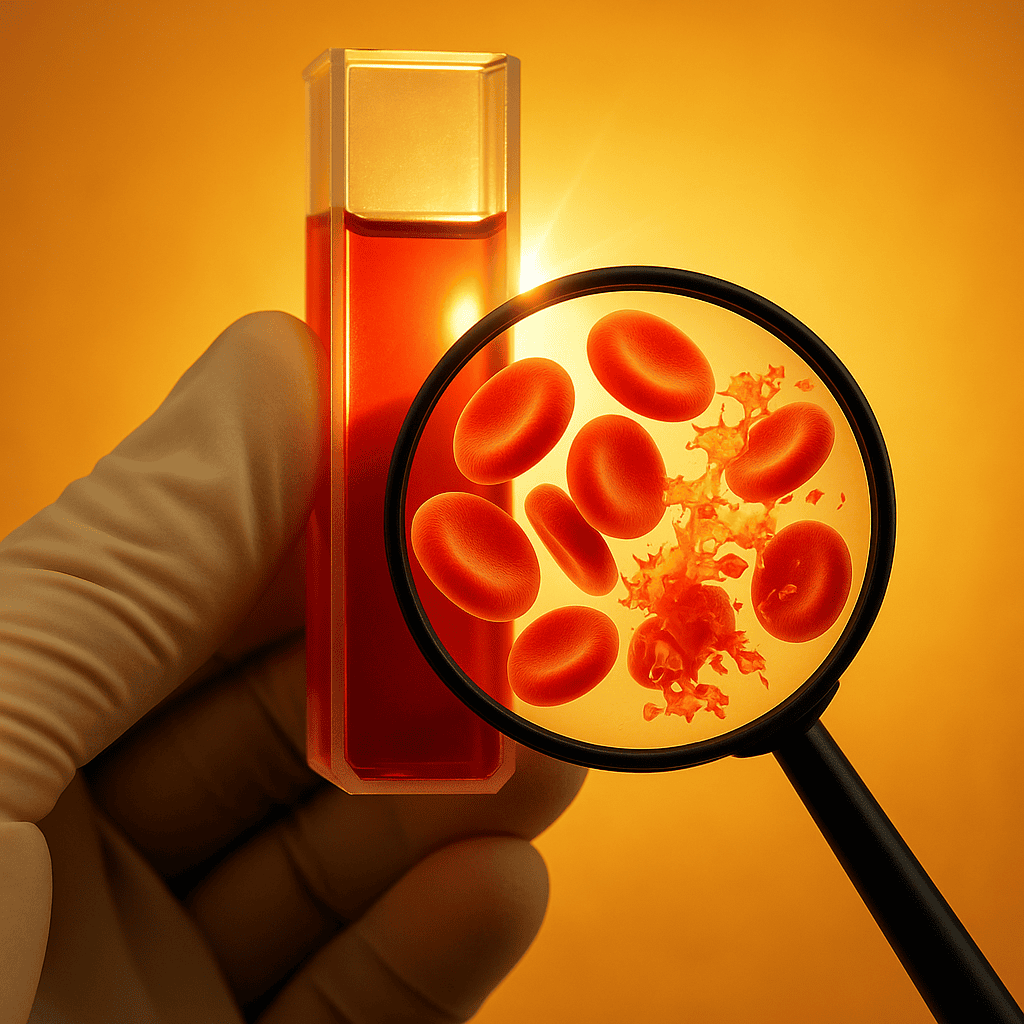
ASTM E2524 – Analysis of Hemolytic Properties of Nanoparticles
As plastic-based materials continue to expand in medical devices, coatings and drug-delivery systems, the potential for small particulates to interact with blood becomes a significant safety consideration. The ASTM E2524 method provides a direct assessment of whether nanoparticulate or microparticulate materials cause damage to red blood cells — a key indicator of hemocompatibility and blood safety.
A single hemolytic reaction may be the deciding factor whether a product advances to market or requires redesign. This method gives developers clear, quantitative data to guide safer and more effective product development.
Hemolysis Testing – a model for cellular toxicity to nanoparticulate material..
When nanoparticles come into contact with blood, even subtle changes in surface chemistry, coating, or formulation can trigger red blood cell damage — a process known as hemolysis. Detecting this early can:
-
Prevent costly redesigns by identifying toxic interactions before clinical testing.
-
Support regulatory submissions with internationally recognized data from our ISO 17025 accredited laboratory
-
Strengthen safety claims for blood-contacting or implantable technologies.
-
Differentiate materials and formulations by demonstrating superior hemocompatibility performance.
In short, ASTM E2524 provides the confidence needed to move forward — whether developing a novel nanocarrier, testing a surface-modified material, or validating a new medical device.
How the Test Works
The method uses human whole blood to evaluate acute in vitro damage caused by nanoparticulate materials. The test measures hemoglobin released when red blood cells are exposed to the sample, using a colorimetric assay at 540 nm.
Results are expressed as percent hemolysis — providing a direct measure of cell membrane damage. A hemolysis level below 5% is generally considered non-hemolytic, while results above that threshold indicate potential risk for blood-contact applications.
What You Gain from E2524 Testing
-
Actionable data for risk assessment: Quantifies the degree of red blood cell damage, enabling comparison across materials and formulations.
-
Regulatory alignment: Recognized internationally under ISO 10993-4 as a core biocompatibility indicator for blood-contacting materials.
-
Improved material design: Supports decisions on coatings, surface treatments, or formulation adjustments to reduce toxicity.
-
Faster go/no-go decisions: Provides a reliable screening tool to prioritize promising candidates in the R&D pipeline.
For more information on our testing services, including ASTM E2524, contact our laboratory at 847-483-9950 or info@situtest.com.